Remember Rabbit? They were the company that launched the R1, a pocket-sized AI device with a bright orange chassis and a scroll wheel that looked great in a product shoot. After a significant amount of fanfare, things went quiet. For most users, the R1 eventually became a desk ornament or disappeared into a junk drawer once the novelty of its simplified interface wore off. However, the company is back with a new announcement that suggests they haven’t given up on dedicated hardware just yet.
The Cyberdeck: Rabbit’s Modern Netbook
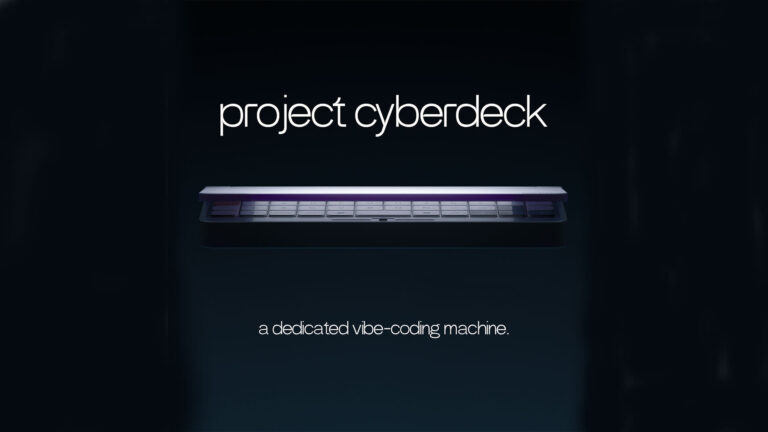
Rabbit is moving away from the handheld assistant form factor to revisit a forgotten category: the netbook. Known internally as Project Cyberdeck, the new device is a modern take on the ultra-portable PC, specifically designed for “vibe coding” and command-line efficiency. Rather than competing with high-priced AI workstations, Rabbit is looking to provide a secondary, focused tool for developers who find standard low-cost laptops lacking in tactile quality.
Hardware Inspiration and Tactile Goals
The design takes a clear cue from the 2009 Sony Vaio P, a 1.4-pound [0.63 kg] device that was famously pocketable but held back by a high price tag and poor performance. Rabbit CEO Jesse Lyu noted that modern budget portables often rely on “shitty rubber dome” keyboards. These use silicone sheets that feel mushy and unresponsive during long typing sessions. To fix this, the Cyberdeck is planned to feature a 40 percent layout keyboard with low-profile mechanical switches and a hot-swappable PCB. For the user, this means a much more deliberate, clicky typing experience that can be customized by swapping out the internal switches.
The Form Factor: A cross between the Rabbit R1 and a Nintendo DS, aiming for a footprint similar to an 8-inch [20 cm] notebook.
Connectivity: Early renders suggest four USB-C ports, allowing for external monitors and peripherals, which is essential for a device with a smaller primary screen.
The Display: Rabbit is testing a 7-inch [18 cm] OLED panel. OLED technology allows for “true blacks” by turning off individual pixels, which significantly reduces power consumption when using dark mode interfaces.
Linux and Performance Targets
On the technical side, Rabbit is benchmarking the Cyberdeck against the Raspberry Pi 5. This suggests a quad-core Arm-based processor capable of handling everyday coding tasks and driving dual external displays. The device will run a modified version of Linux, giving users the freedom to install third-party tools or tweak the operating system. While the final chipset is still being sourced, the goal is a $500 [€472] price point. It needs to be powerful enough to communicate with servers from OpenAI or Anthropic without lag, yet affordable enough to be an impulsive purchase for enthusiasts.
The display specs being considered are surprisingly high-end: a 165Hz refresh rate and 815 nits of brightness. High nits are vital for visibility when working outdoors or in brightly lit coffee shops, while the high refresh rate makes scrolling through lines of code feel fluid. However, like much of the industry, Rabbit is facing rising costs for memory and components due to high demand in the AI sector. This may influence the final RAM configuration or the 2026 release window.
They all come with shitty rubber dome keyboards. They’re not something you would enjoy typing on for an extended period of time. So Rabbit decided to build its own device.
Whether a dedicated “coding-only” netbook is a functional necessity or just a well-designed novelty is the main question. With modern IDEs already integrating AI services, carrying a second piece of hardware solely for command-line work might be a hard sell. Rabbit has a history of rapid development: shipping the R1 just 93 days after design began: so we should see if the Cyberdeck delivers on its “form and function” promise later this year.